Costa Rica is safe. But the sun will burn you in 20 minutes.
Costa Rica is one of the safest countries in Latin America. The dangers that actually catch tourists off guard are environmental — and entirely avoidable with the right knowledge. I live here. Here's what's real.
The real dangers — ranked honestly
Not what travel forums obsess over. What actually sends tourists to hospital or ruins trips.
The sun — UV index 12–14+ (Extreme)
highThis is the most common danger for visitors in Costa Rica. At 8–11° North latitude, the UV index regularly hits 12–14 (classified Extreme). In northern Europe a UV of 6–7 is a strong summer day. At UV 14, unprotected skin burns in 15–20 minutes. Apply SPF 50+ every 2 hours. Wear a hat. Take shade at midday. Most tourists ignore this on their first day and spend the rest of the trip in pain.
Buy sunscreen before arrival — it's expensive in Costa Rica. Reapply after swimming every time.
Rip currents — Pacific coast beaches
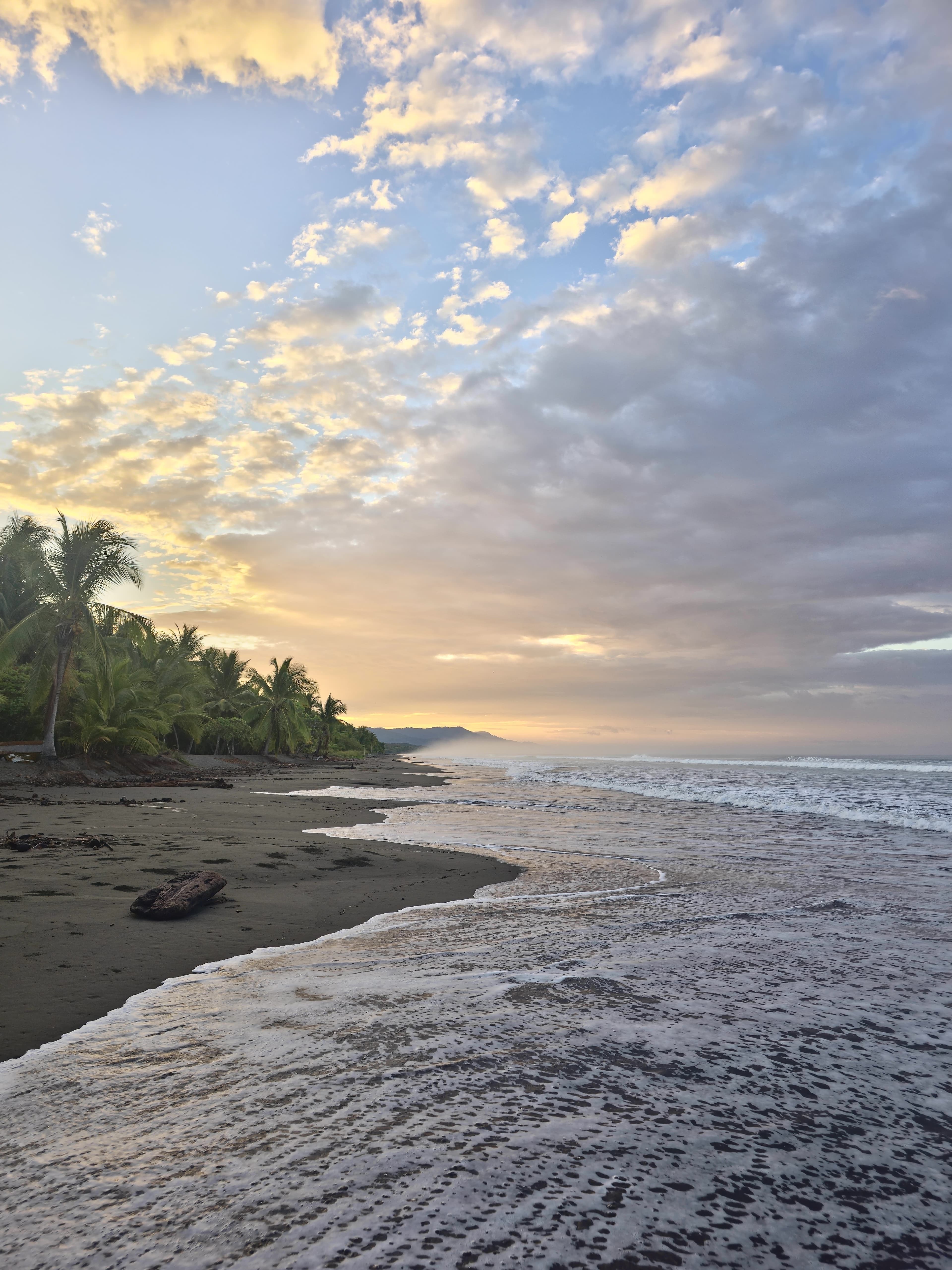
highThe Pacific coast has powerful waves and rip currents at many beaches. Drowning is one of the leading causes of accidental death for tourists in Costa Rica. Always check beach flags (red = no swimming), never swim alone, and never swim at night. If caught in a rip — swim parallel to shore, not against it.
Ask Costa Planner which beaches on your route are safe for swimming. Not all of them are.
River mouths and estuaries — crocodiles
highAmerican crocodiles congregate at river mouths — where freshwater meets the sea. This is their feeding ground. Never swim at river estuaries, even if the water looks calm and clear and others are doing it. The Tárcoles River, Terraba River, and dozens of coastal estuaries are home to large crocodile populations.
If you're unsure whether you're near a river mouth — don't swim. Ask a local or ask Costa Planner.
Night driving
highPotholes are invisible after dark. Livestock wander onto unlit roads. Speed bumps are unmarked. Signage disappears. The accident rate on Costa Rican roads at night is disproportionately high. Plan every driving day to arrive at your accommodation before dark. This is non-negotiable — Costa Planner builds it into every itinerary.
No exceptions. If you're running late, stop and wait for morning.
Venomous snakes — fer-de-lance (terciopelo)
mediumThe fer-de-lance is responsible for most snakebite deaths in Central America. It's well camouflaged, stays on the ground near vegetation, and doesn't always rattle before striking. It exists throughout Costa Rica — particularly in the lowland jungle, agricultural land, and forest edges. Basic rules: watch where you step on forest trails, don't put your hands where you can't see, and wear closed shoes in forest.
Snakebite antivenom is available at all major hospitals and many rural clinics. Most hikes go without incident. Awareness, not fear.
Flash floods — rivers in rainy season
mediumIn rainy season (May–November), rivers can rise 1–2 metres in under an hour due to rain many kilometres upstream. Never cross a river ford on foot or in an underpowered vehicle if the water is moving strongly or cloudy. What was knee-deep in the morning may be impassable by afternoon.
These itineraries plan river crossings for morning drives, before the afternoon rain.
Petty crime in tourist zones
lowJacó, central San José, and Tamarindo have phone and camera theft, particularly from parked cars and open-air restaurants. Don't leave bags visible in rental cars. Don't leave valuables on the beach. This is basic travel awareness — not cause for fear.
Costa Planner's recommended lodges are in areas with minimal petty crime. The rule: avoid Jacó.

The honest verdict
Costa Rica is genuinely safe. The country has no army, one of the highest life expectancies in the Americas, and a culture built around pura vida. Millions of tourists visit each year without incident. The risks above are manageable — and knowing them in advance means none of them will catch you off guard.

Ready to plan your trip?
Costa Planner builds every itinerary with safety considerations built in — correct beaches, morning mountain drives, no unnecessary river crossings. You focus on enjoying it.